

Strawberry and Vegetable Beds with Weed Mat and Drip
Strawberries and vegetables on raised beds give the best results when two things are under control: water and weeds. Drip irrigation puts water right at the roots, and weed mat for strawberry and vegetable beds stops weeds stealing it. Put together, they save hours of weeding and watering every week. This guide shows how to set up a bed with drip lines and weed mat, step by step, and how much material you need.
Why combine weed mat and drip?
- Water goes to the crop, not the weeds. Drip wets a small zone around each plant. Without mat, that wet strip is exactly where weeds grow fastest.
- Cleaner fruit. Strawberries resting on mat stay off bare soil, so they are cleaner at harvest.
- Less evaporation. Covered soil stays moist longer between irrigations.
- Less labour. No hand weeding between plants for the season.
- Reusable. Unlike thin plastic mulching film, a UV-stabilised 110 GSM woven mat can be lifted, cleaned and relaid for 3 to 5 years.
What you need
| Item | Recommended | Why |
|---|---|---|
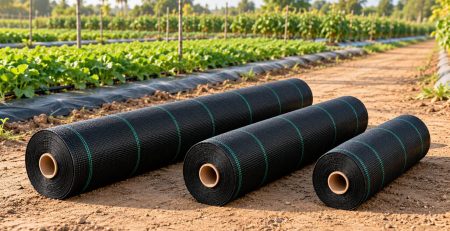
| Weed mat | 1 m × 100 m roll for beds up to about 90 cm wide; 1.5 m roll for wider beds | Covers the bed top and shoulders in one piece |
| Drip lateral | 16 mm lateral with drippers at plant spacing | Water at each plant |
| Drip pipe stakes | 16 mm blue drip pipe holder stakes | Keep drippers at the root zone before you cover them |
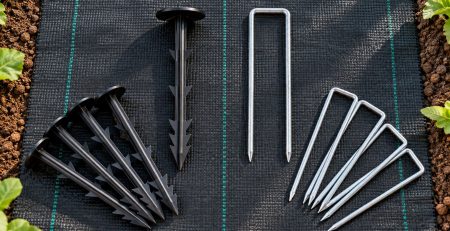
| Pins | 6 inch weed mat nails or U-pins | Hold mat edges and joins flat |
| Tools | Scissors or knife, tape, rake, mallet | Cutting and levelling |
Step-by-step bed setup
- Prepare the bed. Remove weeds and stones, mix in compost, shape a raised bed and level the top.
- Lay the drip laterals. Run one or two 16 mm laterals along the bed, with drippers where plants will sit.
- Fix the laterals. Push in a drip stake every 1 to 2 m and at each bend, and press the pipe into the C-clip. This stops the line shifting when you roll the mat over it.
- Test the drip. Run water and check every dripper wets the right spot. Fixing it later means lifting the mat.
- Roll the weed mat over the bed. Use the green guide lines to keep it centred and straight.
- Pin the edges. One nail every 1 to 1.5 m along each edge, and every 30 to 50 cm on joins.
- Mark and cut planting holes. Use the guide lines to space holes evenly. Cut a small X or round hole over each dripper.
- Plant through the holes and water in.
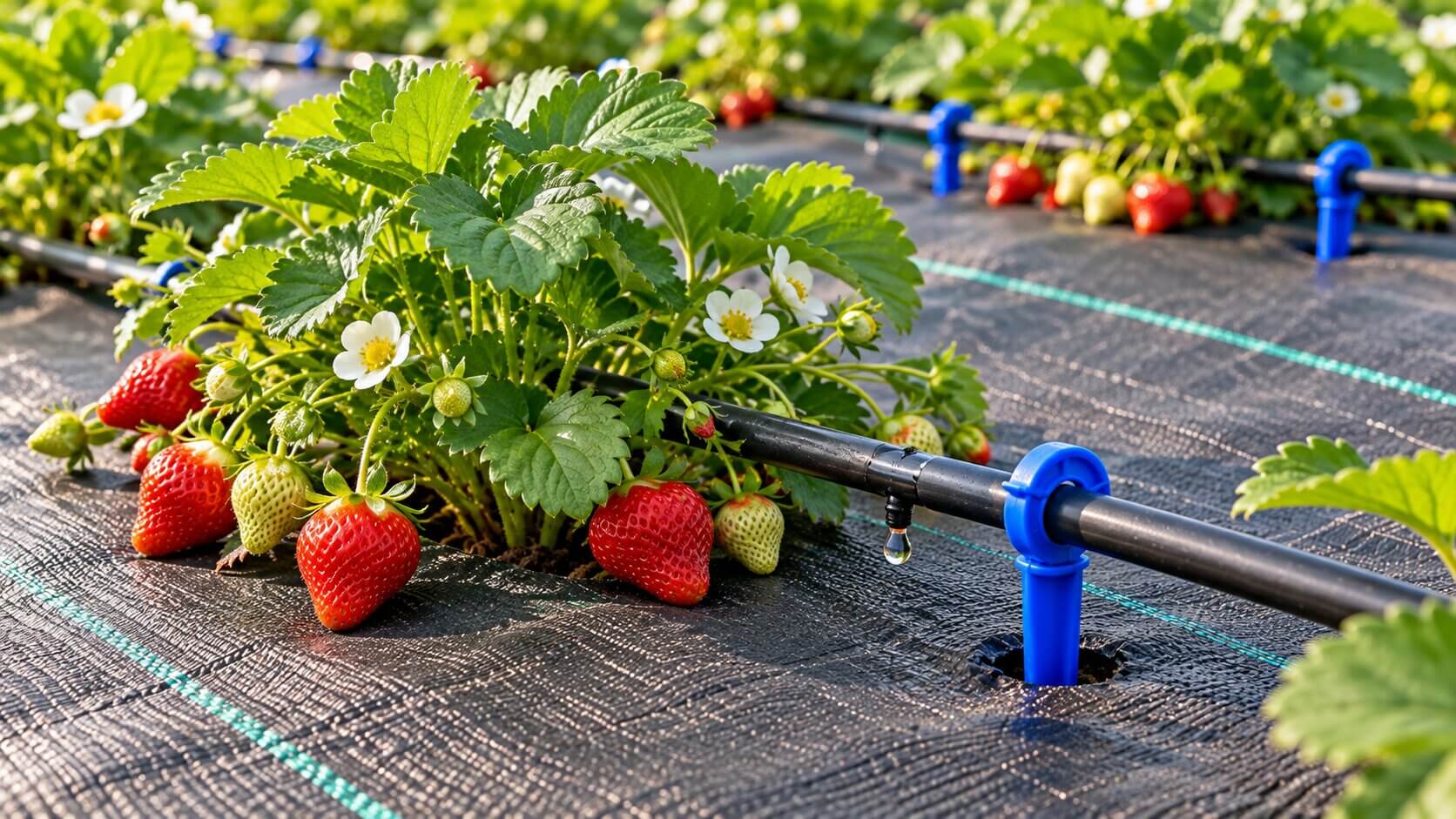
Strawberry beds
Strawberries are usually grown in two staggered rows on a raised bed. With weed mat:
- Run two laterals, one under each plant row, or one central line on narrow beds.
- Keep planting holes small, just big enough for the crown, so light stays out.
- Fruit rests on the mat instead of soil, which keeps it cleaner.
- Runners stay on top of the mat and are easy to remove or redirect.
Growers in Mahabaleshwar, Himachal, the Northeast and on terraces in cities all use this bed style. On sloping hill beds, pin edges closer and use 7 inch nails.
Vegetable beds
The same set-up works for tomato, capsicum, chilli, brinjal, cucumber, melons and leafy greens. For tall crops like tomato and cucumber, add a stake or string at each plant and train stems with plant support clips. Our guide on supporting tomato and climbing plants shows how.
How much material do you need?
| Bed size | Weed mat | Drip stakes (1 per 1.5 m per lateral) | Edge pins at 1 m |
|---|---|---|---|
| 4 beds × 10 m, 1 lateral each | 40 m of 1 m roll | about 30 | about 80 |
| 10 beds × 30 m, 2 laterals each | 300 m (3 rolls of 1 m) | about 400 | about 600 |
| Half acre of strawberry beds | Measure total bed length | 2 laterals: length × 2 ÷ 1.5 | length × 2 |
For a full farm layout, send us your bed plan and we will quote mat, stakes and pins together.
Mistakes to avoid
- Covering drip before testing: always run the system first.
- Big planting holes: large cuts let light in and weeds grow around the plant.
- Loose edges: wind and rain get under unpinned edges and lift the mat.
- Thin plastic film instead of woven mat: film does not let rain through and usually lasts a single season.
Related guides
See how to lay weed mat step by step, how to keep drip lines in place with 16 mm stakes and our weed mat rolls.
Frequently asked questions
Is weed mat good for strawberries?
Yes. Weed mat keeps strawberry beds weed-free, holds moisture and keeps fruit off bare soil. Woven mat lets rain and drip water through and can be reused for several seasons.
Should drip line go under or over weed mat?
Our recommendation is to lay and fix the drip line first, test it, then lay the weed mat over it and cut holes at each dripper and plant.
What size weed mat for a raised bed?
Use a 1 m wide roll for beds up to about 90 cm wide so the mat covers the shoulders, and a 1.5 m roll for wider beds.
How do I stop drip lines moving under weed mat?
Fix 16 mm laterals with drip pipe holder stakes every 1 to 2 m and at every bend before rolling out the mat.
Is weed mat better than plastic mulching sheet?
Woven weed mat is water permeable, stronger and reusable for 3 to 5 years. Thin plastic mulching film is cheaper but blocks rain and usually lasts one season.
How big should planting holes be?
Just large enough for the plant crown or stem. Small X cuts keep light out so weeds cannot grow around the plant.







LEAVE A COMMENT