
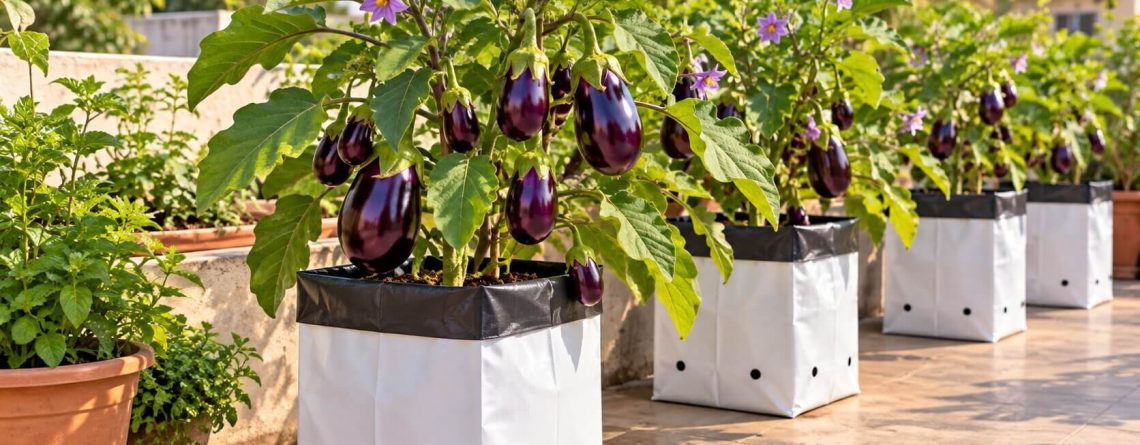
Grow Bag Size for Brinjal: What Works and How to Grow It on a Terrace
Brinjal is one of the most rewarding vegetables to grow on an Indian terrace, but it is also a big, hungry plant. Choose a container that is too small and you get a stunted bush with a handful of fruit; choose the right one and a single plant keeps producing for months. This guide answers the most searched question first, the right grow bag size for brinjal, and then walks you through growing brinjal in grow bags from planting to harvest.
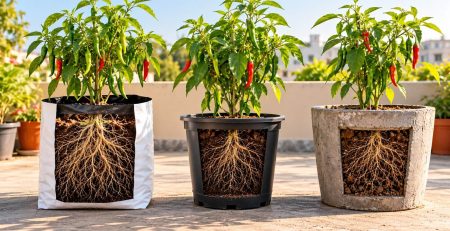
Quick answer: As a general guide, full-size brinjal varieties do best in about 30 litres or more of mix per plant, while compact or dwarf varieties can be grown in smaller containers of around 15 to 20 litres. Our 20 × 20 × 35 cm grow bag holds about 14 litres, so it suits compact, small-fruited brinjal with regular watering and feeding; use a larger container for big, full-size varieties.
Who this guide is for: terrace and balcony gardeners, kitchen gardeners and nurseries growing brinjal (baingan) in grow bags or containers.
Key facts at a glance:
- University of Maryland Extension: standard eggplant needs at least 8 to 10 gallons (about 30 to 38 litres); dwarf types at least 4 to 6 gallons (about 15 to 23 litres)
- Allions Global grow bag: 20 × 20 × 35 cm, about 14 litres, white HDPE with drainage holes
- Grow bags come in packs from 20 to 200, so small terraces and large gardens are both covered
- One brinjal plant per bag, with a stake from planting day
- About 12 litres of potting mix fills one bag
Grow bag size for brinjal: the short answer
| Brinjal type | Suggested mix per plant | What to use |
|---|---|---|
| Full-size, long or large round varieties | About 30 litres or more | A large grow bag, tub or ground bed |
| Compact or dwarf varieties | About 15 to 20 litres | A medium grow bag |
| Small-fruited, compact plants on a terrace | About 14 litres with good care | Our 20 × 20 × 35 cm grow bag, one plant per bag |
These are general guides. The more mix a plant has, the more water and nutrients it can hold, which matters most in hot weather. If you use a smaller bag, make up for it with more frequent watering and regular feeding.
Why container size matters for brinjal
- Root room: brinjal forms a deep, spreading root system to support a bushy plant and heavy fruit.
- Water buffer: a bigger volume of mix dries out more slowly on a hot terrace.
- Nutrition: brinjal fruits over a long period and needs steady feeding.
- Stability: a loaded plant can tip a small, light bag unless it is staked.
About our grow bags
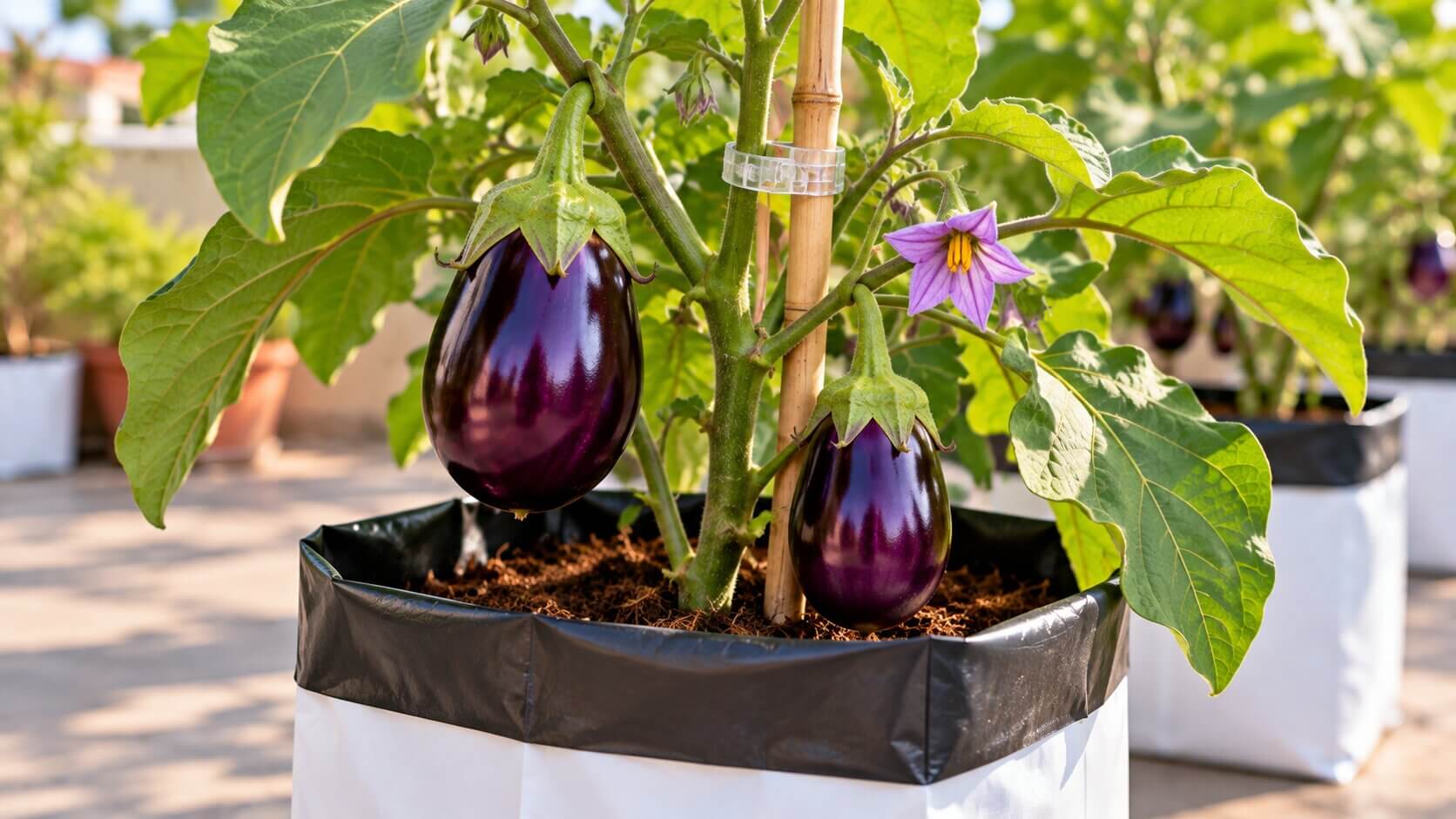
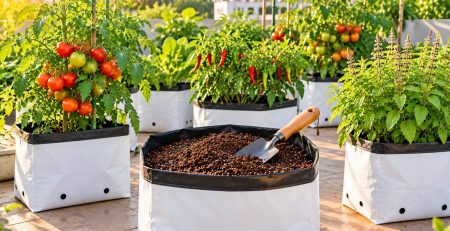
Our HDPE grow bags are 20 × 20 × 35 cm (about 8 × 8 × 14 inch), roughly 14 litres. The tall shape gives good depth on a small footprint, the white outer surface reflects heat, punched holes drain excess water, and the bags fold flat for storage. They suit compact brinjal, chilli, capsicum, cherry tomato, okra, greens and herbs. For which bag suits each vegetable, see our grow bag size guide for tomato, chilli and brinjal.
How to grow brinjal in grow bags, step by step
- Choose a compact variety if you are using medium grow bags.
- Prepare a rich, light mix: roughly equal parts soil, cocopeat and compost or vermicompost. See our potting mix guide.
- Fill to 3 to 5 cm below the rim and water until it drains.
- Transplant one healthy seedling per bag, ideally in the evening, and water in.
- Push a bamboo stake in on planting day so you do not damage roots later.
- Place in full sun, at least 6 hours a day.
- Clip the main stem to the stake with plant support clips every 20 to 30 cm as it grows.
- Water regularly: check daily in summer and water when the top few centimetres are dry.
- Feed every 2 to 3 weeks with a handful of compost or vermicompost once flowering starts.
- Harvest young and glossy fruit by cutting the stalk; regular picking keeps the plant producing.
Watch out for shoot and fruit borer
Shoot and fruit borer is the most common brinjal pest in India. Signs are wilting shoot tips and holes in fruit plugged with frass. Tamil Nadu Agricultural University recommends cultural steps such as removing and destroying affected shoots and fruits, and avoiding growing brinjal continuously in the same place. On a terrace, check plants every few days and remove damaged shoots promptly.
How many bags and how much mix?
Grow bag and potting mix calculator (live prices)
Enter how many plants you want to grow. One brinjal plant per bag.
Mix estimate assumes about 12 litres per 20 × 20 × 35 cm bag filled to 3 to 5 cm below the rim, in a 1:1:1 soil, cocopeat and compost mix. Prices load live from our store and include GST.
| Plants | Bags | Potting mix (about 12 L per bag) |
|---|---|---|
| 5 to 10 plants | 5 to 10 (use the rest of a pack for chilli and greens) | 60 to 120 L |
| 20 plants | 20 | about 240 L |
| 50 plants (community or school garden) | 50 | about 600 L |
Need bags for a nursery or a large terrace project? Ask us for a bulk quote.
Common mistakes
- Two plants in one bag: they compete and both stay small.
- No stake: fruiting plants lean and can tip the bag.
- Heavy soil only: it compacts and drains badly.
- Irregular watering: letting the bag dry out and then flooding it stresses the plant and affects flowering.
- Too little sun: brinjal needs full sun to flower and fruit well.
Related guides
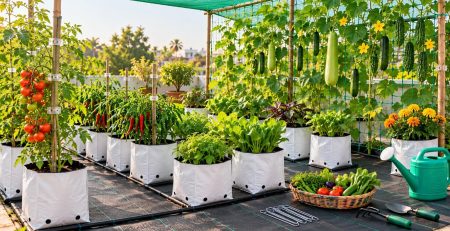
Read grow bags for terrace and balcony gardening, plant support: clips vs tying vs trellis and shade net for terrace gardens for summer protection.
Sources and further reading
- Growing vegetables in containers: choose the right container size (University of Maryland Extension): extension guidance on minimum container volumes for standard and dwarf eggplant and tomato
- Brinjal shoot and fruit borer (TNAU Agritech Portal): symptoms and cultural management of the main brinjal pest in India
- Potting substrate effect on strawberry in terrace gardening (FAO AGRIS): ICAR study supporting a 1:1:1 soil, cocopeat and compost mix for terrace containers
Frequently asked questions
What size grow bag is best for brinjal?
As a general guide, full-size brinjal does best in about 30 litres or more of mix, and compact varieties in about 15 to 20 litres. Our 14 litre grow bag suits compact, small-fruited brinjal with regular watering and feeding.
Can I grow brinjal in a 14 litre grow bag?
Yes, for compact or small-fruited varieties, one plant per bag, with a stake, full sun, regular watering and feeding every 2 to 3 weeks.
How many brinjal plants per grow bag?
One. Two plants in one bag compete for water and nutrients and both stay small.
What potting mix is best for brinjal in grow bags?
A rich, light mix of roughly equal parts soil, cocopeat and compost or vermicompost.
Does brinjal need support in grow bags?
Yes. Push a stake in on planting day and clip the main stem to it every 20 to 30 cm as the plant grows.
How do I control shoot and fruit borer on terrace brinjal?
Check plants every few days and remove and destroy wilted shoots and bored fruits, as TNAU recommends, and avoid growing brinjal in the same bags season after season.

LEAVE A COMMENT