
Tomato Plant Support: Clips vs Tying vs Trellis
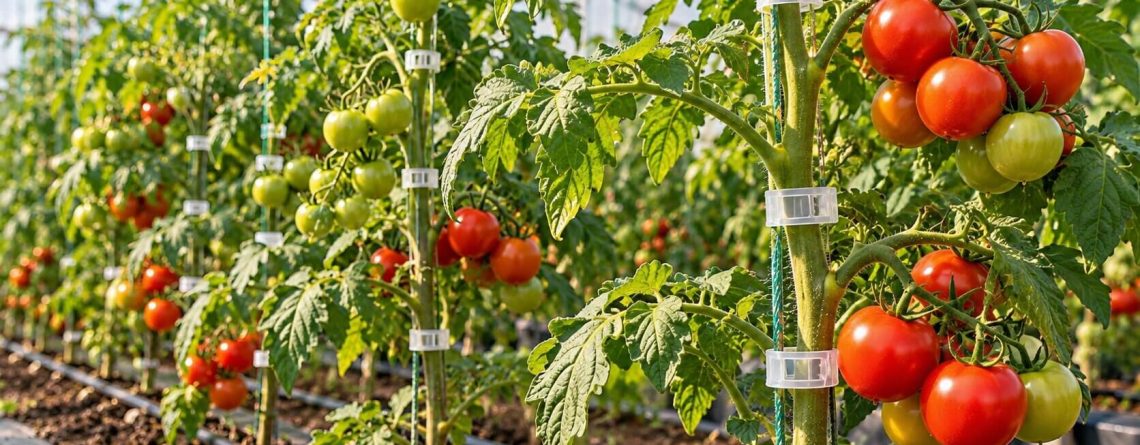
Every tomato plant needs support once it starts to fruit. Left on the ground, stems snap, fruit rots on the soil and diseases spread. But should you tie, clip, or build a trellis? This guide compares the three common ways to give tomato plant support, explains where tomato plant support clips fit in, and helps you pick the right method for a terrace, a kitchen garden or a polyhouse.
First, two parts to every support system
Most confusion comes from mixing up two different things:
- The support: what holds the plant up. A bamboo stake, a vertical string from an overhead wire, a trellis net, or a cage.
- The fastener: what attaches the stem to that support. Twine, jute, cloth strips, or a plant support clip.
So the real choice is which support suits your setup, and then whether to tie or clip the stem to it.
Comparison: tying vs clips vs trellis
| Method | How it works | Pros | Cons | Best for |
|---|---|---|---|---|
| Stake and tying | Stem tied to a bamboo stake with twine or cloth | Low material cost | Slow; knots can cut into stems; ties are usually thrown away each season | A few plants at home |
| Stake and clips | Stem clipped to a stake every 20 to 30 cm | Fast; gentle on stems; reusable | Small upfront cost for clips | Terrace, grow bags, kitchen gardens |
| String or trellis and clips | Stem clipped to a vertical string or trellis net | Very fast over long rows; tidy, upright canopy | Needs an overhead wire or net frame | Polyhouses, net houses, commercial rows |
| Cage | Wire cage around the plant | Little ongoing work | Bulky to store; harder to prune and harvest | Bush tomatoes in open beds |
Why clips beat tying for most growers
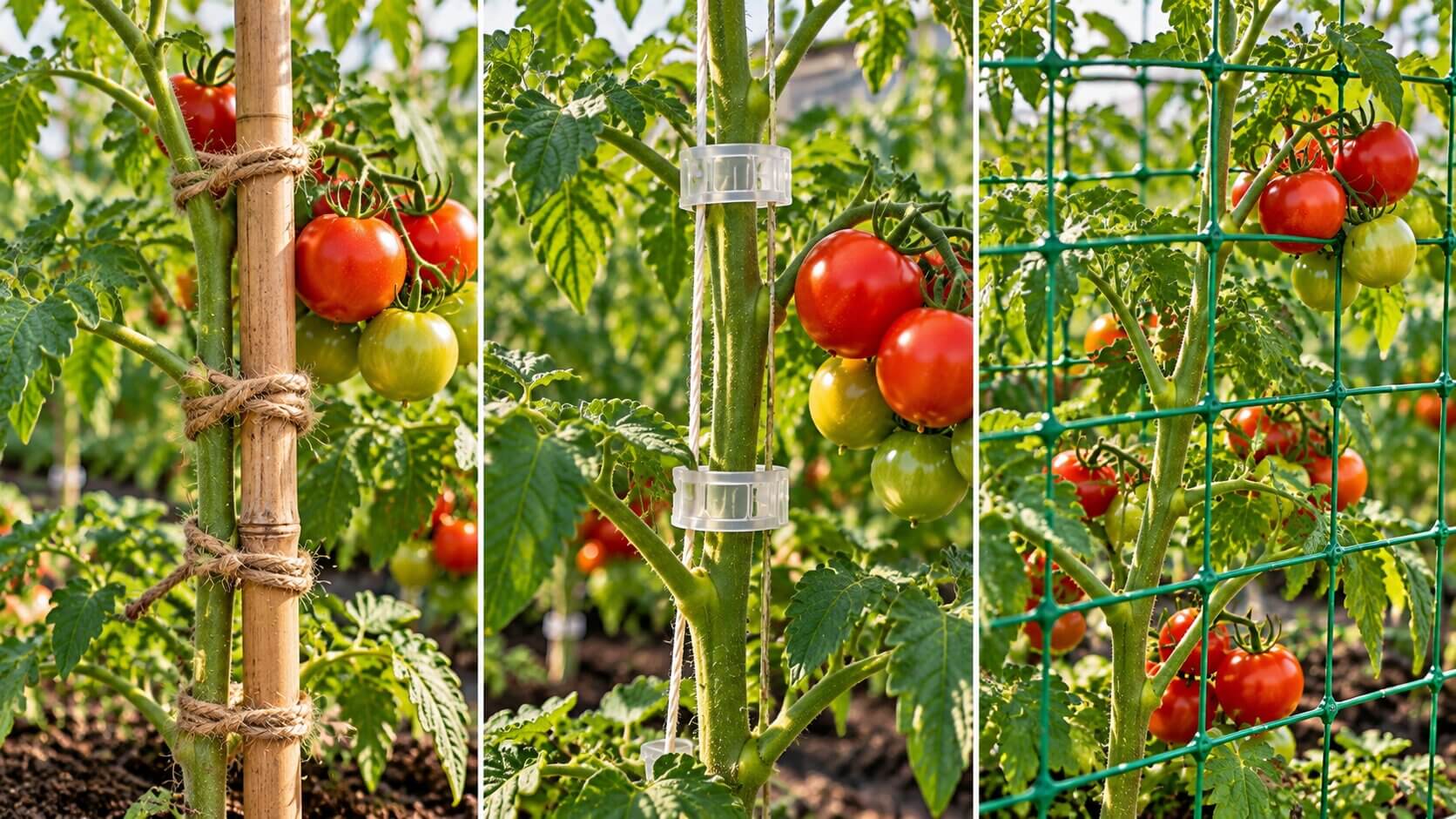
- Speed: pinch open, close around stem and support, move on. No knots.
- Gentle on stems: the clip holds firmly without cutting in and leaves room for the stem to thicken.
- Works with any support: bamboo stakes, vertical strings and trellis nets.
- Reusable: open, remove and use again next season.
How to use tomato support clips
- Put the support in early. Push the stake in at planting time so you do not damage roots later. For string systems, tie the string to the overhead wire before plants get tall.
- Start clipping at 20 to 30 cm tall.
- Clip just below a leaf joint so the joint rests on the clip and the clip carries the weight.
- Close loosely around the stem and the support. Do not squeeze the stem.
- Add a clip every 20 to 30 cm as the plant grows, especially before heavy trusses set fruit.
- Reuse at season end. Open the clips, wash and store them.
How many clips do you need?
| Plant height | Clips per plant (every 25 cm) | For 20 plants | For 1,000 plants |
|---|---|---|---|
| Bush tomato, about 1 m | about 4 | 80 (pack of 100) | 4,000 |
| Climbing tomato, about 1.5 m | about 6 | 120 (pack of 200) | 6,000 |
| Polyhouse tomato on string, about 2 m | about 8 | 160 (pack of 200) | 8,000 |
Commercial growers needing thousands of clips can request a bulk quote.
Which method should you choose?
- Terrace or balcony in grow bags: stake in each bag plus clips. See our HDPE grow bags and the terrace grow bag guide.
- Kitchen garden beds: stakes and clips, or a simple trellis net along the bed with clips.
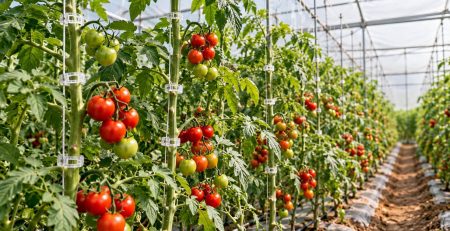
- Polyhouse or net house: vertical strings from an overhead wire, with clips every 20 to 30 cm. It is the fastest system for long rows.
- Bush varieties in open fields: short stakes or cages.
Beyond tomatoes
The same clips support cucumber, capsicum, gourds, melons, beans and flowering climbers. For fruit trees, use a different tool: our branch bending tool trains branches to a wider angle.
Related guides
Read our step-by-step guide on how to support tomato and climbing plants with clips. Growing on beds? Keep weeds down with weed mat.
Frequently asked questions
What is the best way to support tomato plants?
For most home and terrace growers, a stake with plant support clips is quickest and gentlest. In polyhouses, vertical strings with clips are fastest over long rows.
Are tomato clips better than tying with string?
Clips are faster to fit, do not cut into stems and can be reused. Tying costs less in material but takes longer and ties are usually discarded each season.
When should I start clipping tomato plants?
Start when plants are 20 to 30 cm tall, then add a clip every 20 to 30 cm as they grow.
Where should the clip go on the stem?
Just below a leaf joint, so the joint rests on the clip and the clip carries the weight.
How many tomato clips do I need per plant?
About 4 for a 1 m bush tomato, 6 for a 1.5 m plant and 8 for a 2 m polyhouse plant, with one clip every 25 cm.
Can I reuse plant support clips?
Yes. Open them at the end of the season, wash and reuse them next year.

LEAVE A COMMENT