
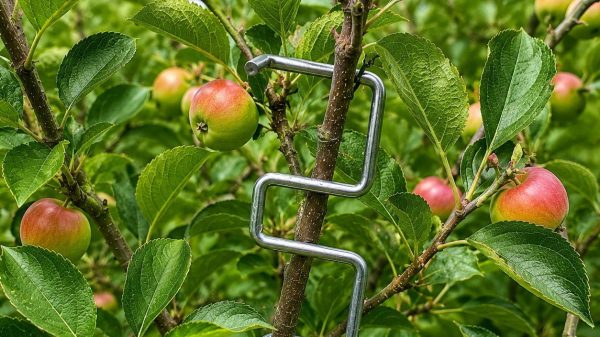
Branch Bending for Mango, Guava and Apple Trees: More Fruit, Better Shape
Young fruit trees naturally send branches straight up. Left alone, they form a tight, crowded canopy where light cannot reach the inner leaves and fruit. Training those branches outwards to a wider angle is one of the oldest orchard techniques, and a branch bending tool makes it quick, cheap and reusable. This guide explains why branch angle matters and how to use a branch spreader on apple, guava, mango and other fruit trees.
Why branch angle matters
Fruit growers have long trained branches to a wider angle for a few practical reasons:
- More light into the canopy. An open tree lets sunlight reach inner leaves and developing fruit.
- Better air flow. An open canopy dries faster after rain or dew, which helps reduce disease pressure.
- Stronger structure. Very narrow, upright branch angles tend to form weak joints that can split under a heavy crop. Wider angles are generally stronger.
- Balanced growth. Upright shoots tend to put energy into leafy growth; branches trained outwards are generally more inclined to fruit.
- Easier work. Spraying, pruning and harvesting are simpler in an open, well-shaped tree.
Exact results depend on variety, age, rootstock and care, but branch training is a standard part of orchard management.
What is a branch bending tool?
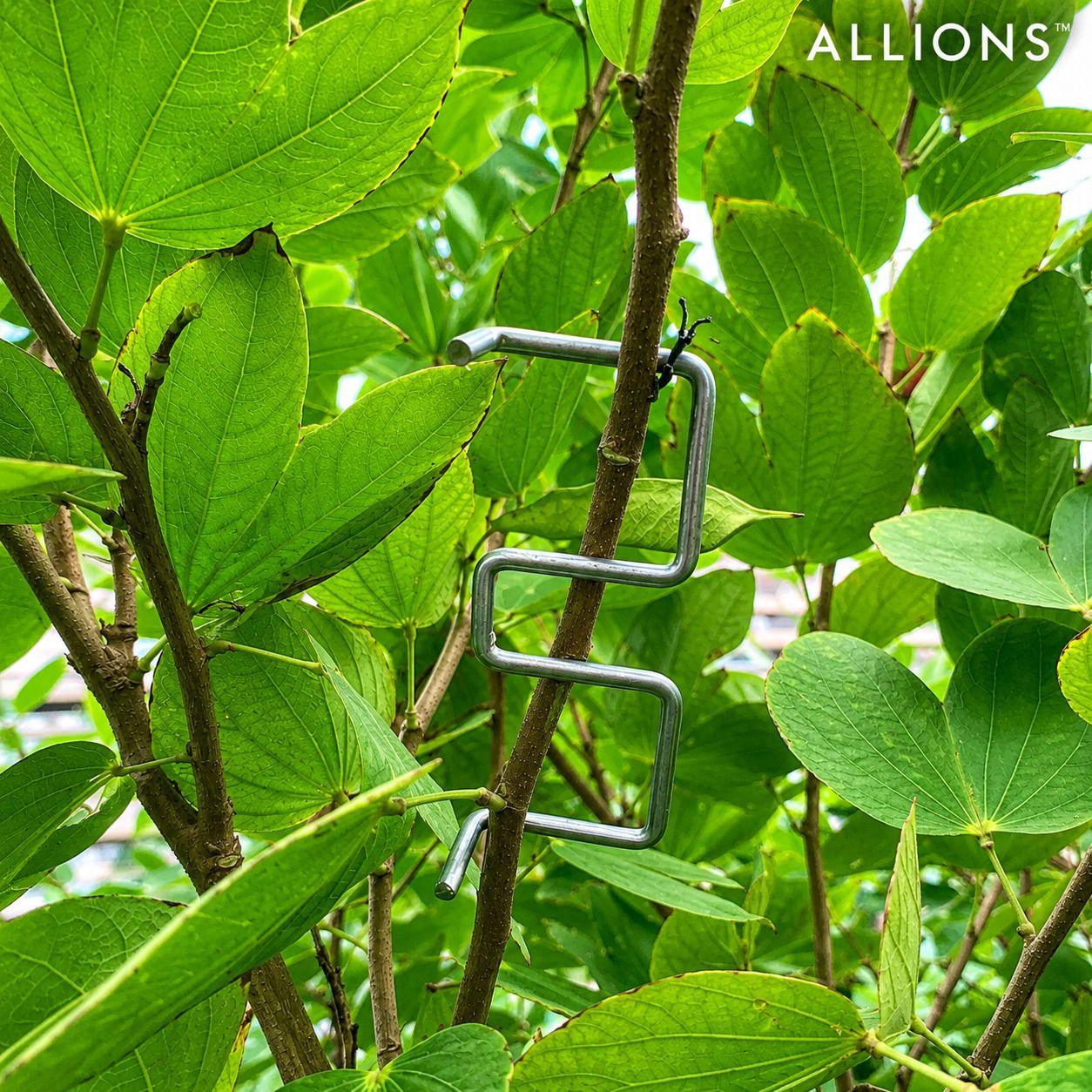
Our branch bending tool, also called a branch spreader or tree branch bender, is a zigzag piece of aluminium about 10 cm long and 4 mm thick. One end sits against the trunk or central leader, the other hooks onto a young branch, and it holds the branch at the wider angle while the wood sets.
- Aluminium: light and weather resistant.
- Zigzag shape: holds firm against bark without cutting in.
- Reusable: once a branch has set, move the tool to the next one.
- Made for fruit tree training: apple, peach, pear, guava and other fruit trees. It is not a bonsai tool.
How to use a branch bending tool
- Choose a young, flexible branch. Training works on young wood that still bends easily. Do not force old, stiff branches.
- Bend the branch gently outwards to the angle you want.
- Hook one end against the trunk or leader and the other on the branch.
- Check the bark. The tool should hold firmly without crushing or cutting.
- Leave it in place for one growing season so the branch sets in its new position.
- Remove and reuse it on the next branch or the next young tree.
Crop notes
Apple
Branch spreading is widely used in apple orchards, including in Himachal Pradesh, Jammu and Kashmir and Uttarakhand, especially in high-density plantings. Fit spreaders on young scaffold branches while they are still flexible.
Guava
Guava responds well to canopy management. Spreading young shoots outwards helps open the centre of the tree, making it easier to manage and harvest.
Mango
In high-density mango, canopy shape is managed from the early years. Use the tool on young, flexible shoots as part of your training plan, alongside pruning advice from your local horticulture department.
Peach, pear and other fruit trees
Peach and pear trees are also commonly trained with spreaders while young. The same steps apply.
How many do you need?
| Orchard | Tools per tree (2 to 4 young branches) | Total needed | Pack |
|---|---|---|---|
| Home garden, 10 young trees | 3 | 30 | 100 |
| Small orchard, 50 trees | 3 | 150 | 200 |
| High-density block, 300 trees | 3 | 900 | 1000 |
The tool comes in packs of 100 to 1000. Because it is reusable, the same set trains new branches year after year. For large orchards, request a bulk quote.
Mistakes to avoid
- Bending too far at once: bend gently; a cracked branch will not recover.
- Using it on old, stiff wood: training works on young, flexible branches.
- Forgetting to remove it: once the branch has set after a season, move the tool on.
- Training every branch the same way: follow a planned canopy shape, such as an open centre or central leader.
Complete your orchard toolkit
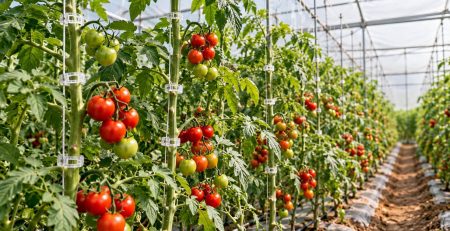
Keep the tree row weed-free with 1.5 m weed mat (see choosing the right weed mat), keep drip lines in place with 16 mm drip pipe stakes, and support young climbers and vegetables with plant support clips.
Frequently asked questions
What is a branch bending tool used for?
It holds a young fruit tree branch at a wider angle while it sets, opening the canopy to more light and air and helping build a stronger tree structure.
How do you use a branch spreader on a fruit tree?
Choose a young flexible branch, bend it gently outwards, hook one end on the trunk and the other on the branch, leave it for one growing season, then move it to the next branch.
Which trees can I use it on?
Apple, peach, pear, guava and other fruit trees. Use it on young, flexible branches.
How long should a branch spreader stay on the tree?
About one growing season, until the branch holds its new angle on its own.
Is this a bonsai branch bending tool?
No. It is designed for training fruit tree branches in orchards and home gardens, not for bonsai.
Is the branch bending tool reusable?
Yes. It is aluminium and can be moved from branch to branch and reused for many seasons.

LEAVE A COMMENT