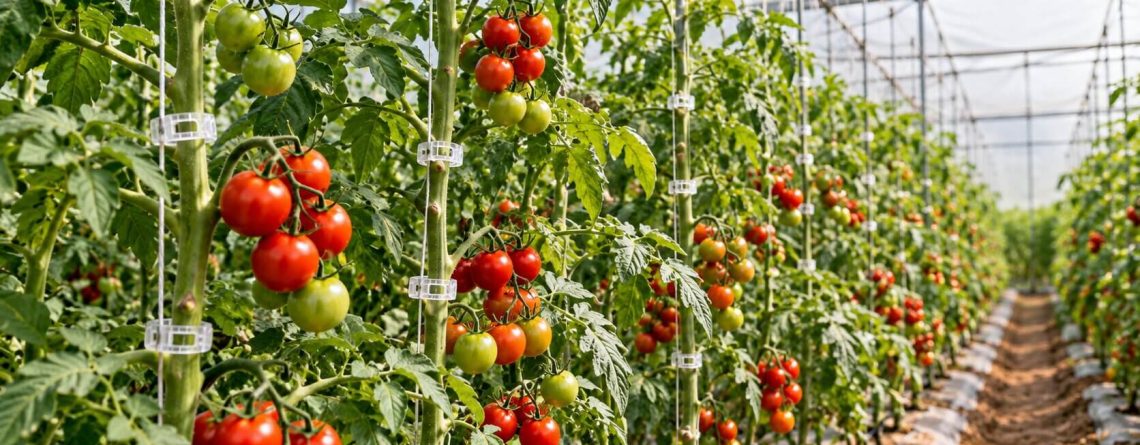
How to Support Tomato and Climbing Plants with Plant Support Clips
Tomatoes, cucumbers, capsicum, gourds and beans grow better when they are trained upwards. Upright plants get more light and air, fruit stays off the ground, and harvesting is easier. Plant support clips make this quick, with no knots to tie and nothing to cut at the end of the season. This guide explains how to choose a support system and use clips correctly on every common crop.
Why support climbing and fruiting plants?
- More light and airflow: leaves dry faster, which helps reduce fungal problems.
- Cleaner fruit: tomatoes and cucumbers stay off wet soil.
- Fewer broken stems: a loaded plant is held before it snaps.
- More plants per space: growing upwards uses vertical space in beds, grow bags and polyhouses.
Choose your support system
| Support | How it works | Good for |
|---|---|---|
| Stake | A bamboo or plastic stake beside each plant | Home gardens, grow bags, terraces |
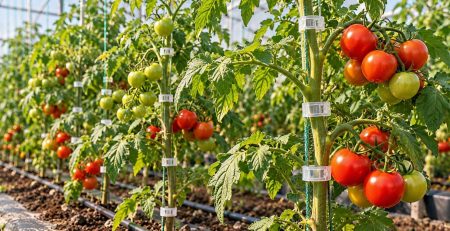
| Vertical string | A string runs from an overhead wire down to the plant base | Polyhouse tomatoes, capsicum and cucumbers |
| Trellis net | A net stretched between two posts | Gourds, beans, cucumber, climbing flowers |
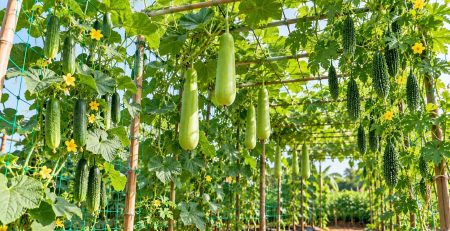
| Pandal | Overhead mesh or wires on poles | Bottle gourd, bitter gourd, ridge gourd |
Not sure whether to tie or clip? Our comparison tomato plant support: clips vs tying vs trellis weighs up the options.
About our plant support clips
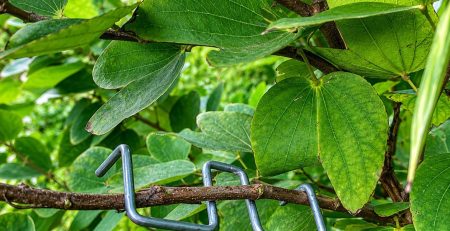
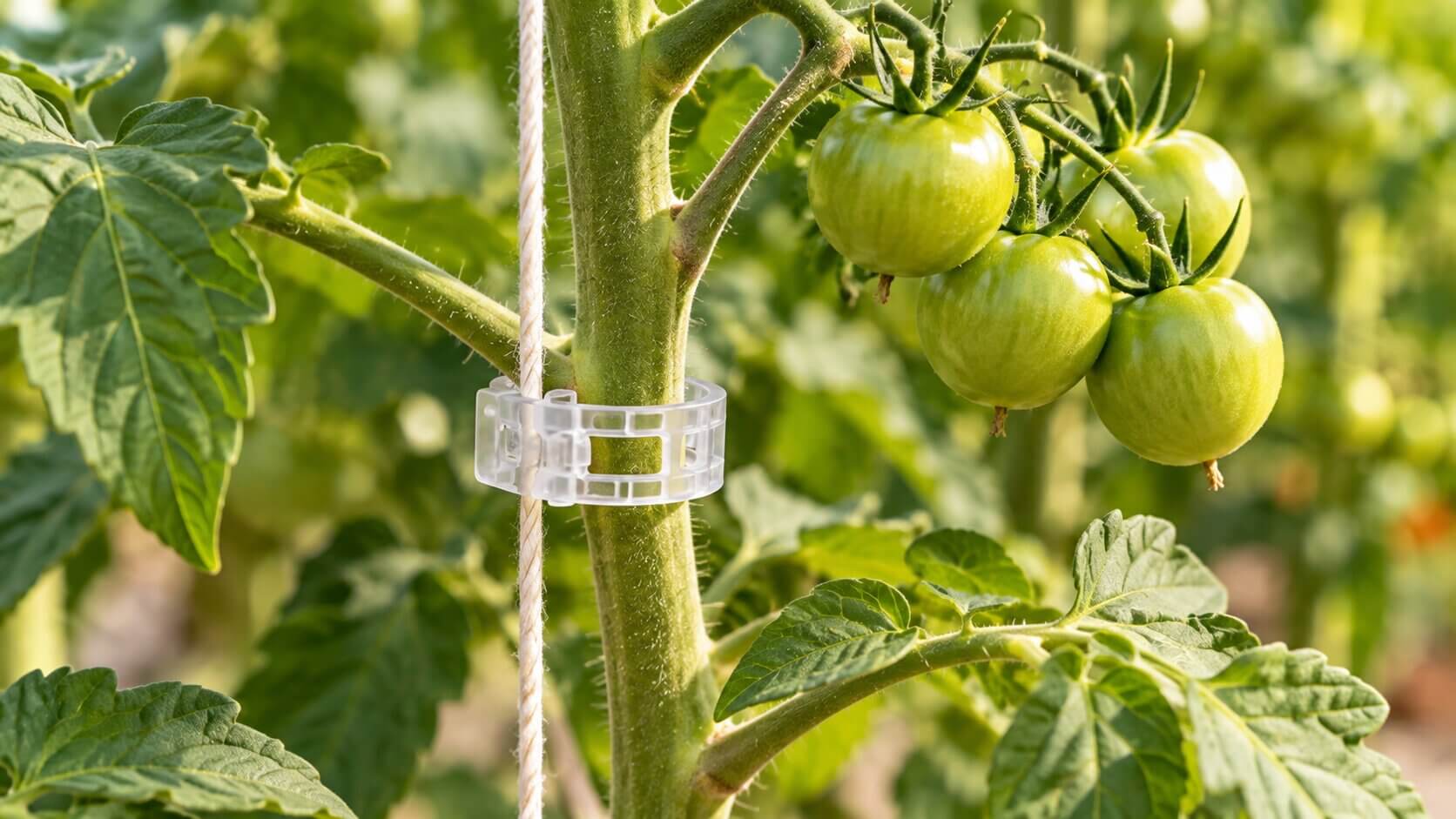
Our plant support clips are clear plastic, hinged clips that close around the stem and the support in seconds. They hold firmly without cutting into the plant, leave room for the stem to thicken, and open again for reuse. They work with stakes, vertical strings and trellis nets, and come in packs of 100 to 1000.
How to use plant support clips
- Put the support in first. Fix stakes or strings at planting time so roots are not disturbed later.
- Start early. Clip young plants once they are 20 to 30 cm tall, before they start to lean.
- Clip below a leaf joint. Place the clip just under a leaf or flower stem so the joint rests on the clip and it carries the weight.
- Keep it loose. Close the clip around the stem and support without squeezing, so the stem can thicken.
- Add a clip every 20 to 30 cm as the plant grows, and an extra one below heavy fruit trusses.
- Reuse at season end. Open the clips, remove them from old plants, wash and store them for next season.
Crop by crop
| Crop | Best support | Clip tips |
|---|---|---|
| Tomato | Stake or vertical string | Clip under each truss as it forms |
| Capsicum and chilli | Short stake; strings in polyhouses | One or two clips hold the main stem upright when fruiting |
| Cucumber | String, stake or trellis net | Clip the main stem until tendrils take over |
| Gourds | Trellis net or pandal | Guide the main stem up the pole to the top |
| Beans | Trellis net or string | Clip young vines to start them climbing |
| Flowering climbers | Trellis or railing | Clip new shoots where you want them to grow |
For climbers in detail, see how to support cucumber, bottle gourd and bitter gourd.
How many clips do you need?
Count about one clip per 25 cm of final plant height: roughly 4 for a 1 m plant, 6 for 1.5 m and 8 for a 2 m polyhouse plant. For 20 home tomato plants, a pack of 100 or 200 is usually enough. Commercial growers can request a bulk quote.
Growing in grow bags
Light grow bags can tip over under a heavy plant. Push a stake into the bag at planting and clip the stem to it as it grows. See our grow bags beginner’s guide and grow bag size guide.
Training fruit trees: branch bending tools
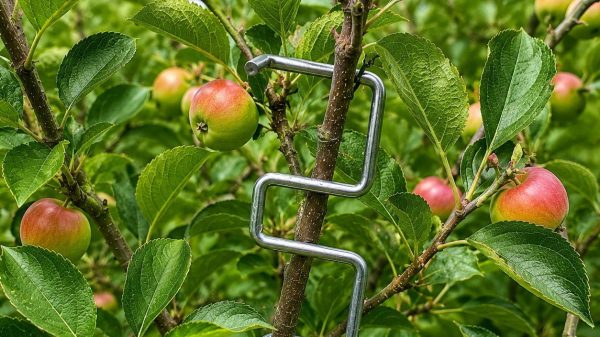
Clips are for soft stems. For young fruit trees, a different tool shapes the branches. A branch bending tool holds a young branch at a wider angle while it sets, which opens the canopy to light and air. Fit it on young, flexible branches, leave it for a growing season, then move it to the next branch. Read more in branch bending for mango, guava and apple trees.
Common mistakes
- Starting too late: leaning plants are harder to straighten and stems can crack.
- Clipping too tight: leave room for the stem to grow.
- Clips too far apart: stems bend and snap between clips under fruit weight.
- Weak supports: a stake must be strong and deep enough for the plant at full size.
Frequently asked questions
What are plant support clips used for?
They attach tomato, cucumber, capsicum, gourd, bean and flowering climber stems to stakes, strings or trellis nets, so plants grow upright without tying knots.
When should I start using plant support clips?
Once plants are 20 to 30 cm tall, before they start to lean. Add a clip every 20 to 30 cm as they grow.
Will plant support clips damage stems?
No, if closed loosely. They hold firmly without cutting in and leave room for the stem to thicken.
Can I reuse plant support clips?
Yes. Open them at the end of the season, wash and store them for next year.
Do plant support clips work on trellis net?
Yes. They work with bamboo stakes, vertical strings and trellis netting.
How many plant support clips per plant?
About one per 25 cm of final height: roughly 4 for a 1 m plant, 6 for 1.5 m and 8 for 2 m.