Grow Bags for Terrace and Balcony Gardening: A Beginner’s Guide
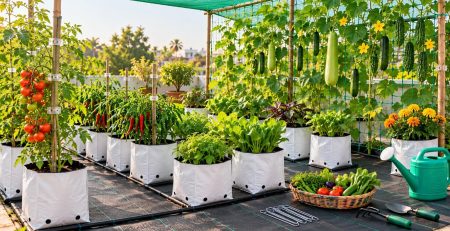
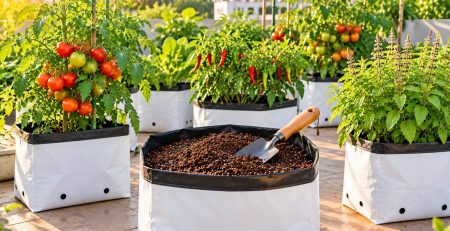
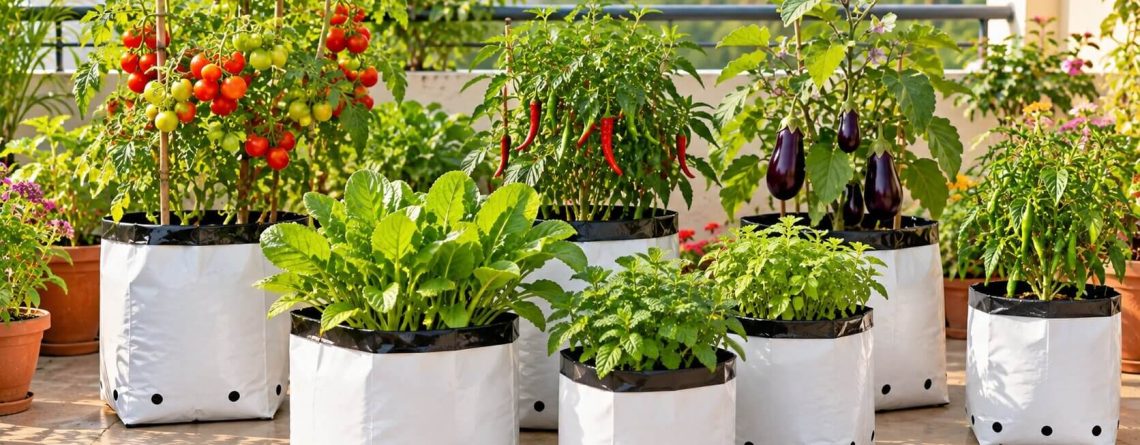
Grow bags for terrace and balcony gardening make it easy to grow your own vegetables in the city. They are light, need no digging, drain well and can be moved to follow the sun. This beginner’s guide covers why grow bags work so well on Indian rooftops, where to place them, how to make a good potting mix, how to fill and plant, and how to care for plants through the seasons.
Why grow in grow bags?
- Light and easy to move: much lighter than clay or cement pots, so they are easier to carry up to a terrace and gentler on the roof.
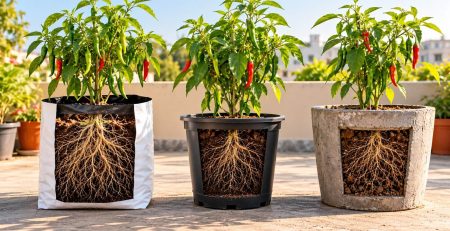
- Good drainage: punched holes let extra water drain away instead of sitting around the roots.
- Cooler roots: a white outer surface reflects sunlight on hot days.
- Healthy roots: roots get air and do not sit waterlogged.
- Reusable: empty, clean and fold them flat at the end of the season.
Comparing options? See HDPE grow bags vs plastic pots vs cement pots.
About our grow bags
Our white HDPE grow bags measure 20 × 20 × 35 cm (about 8 × 8 × 14 inch) and hold roughly 14 litres of mix. They come in packs of 100, 200, 500 and 1000, which suits large terraces, community and school gardens, and nurseries. Many home gardeners share a pack with neighbours or their housing society.
Pick the right spot
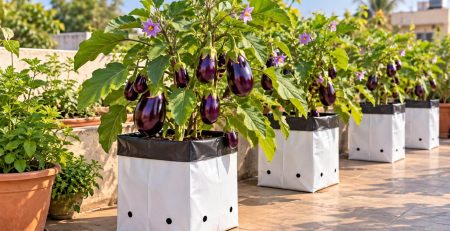
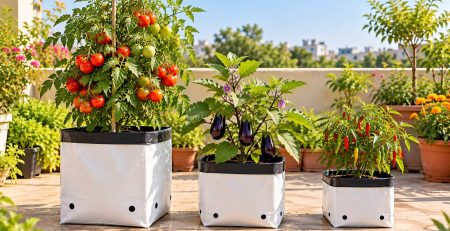
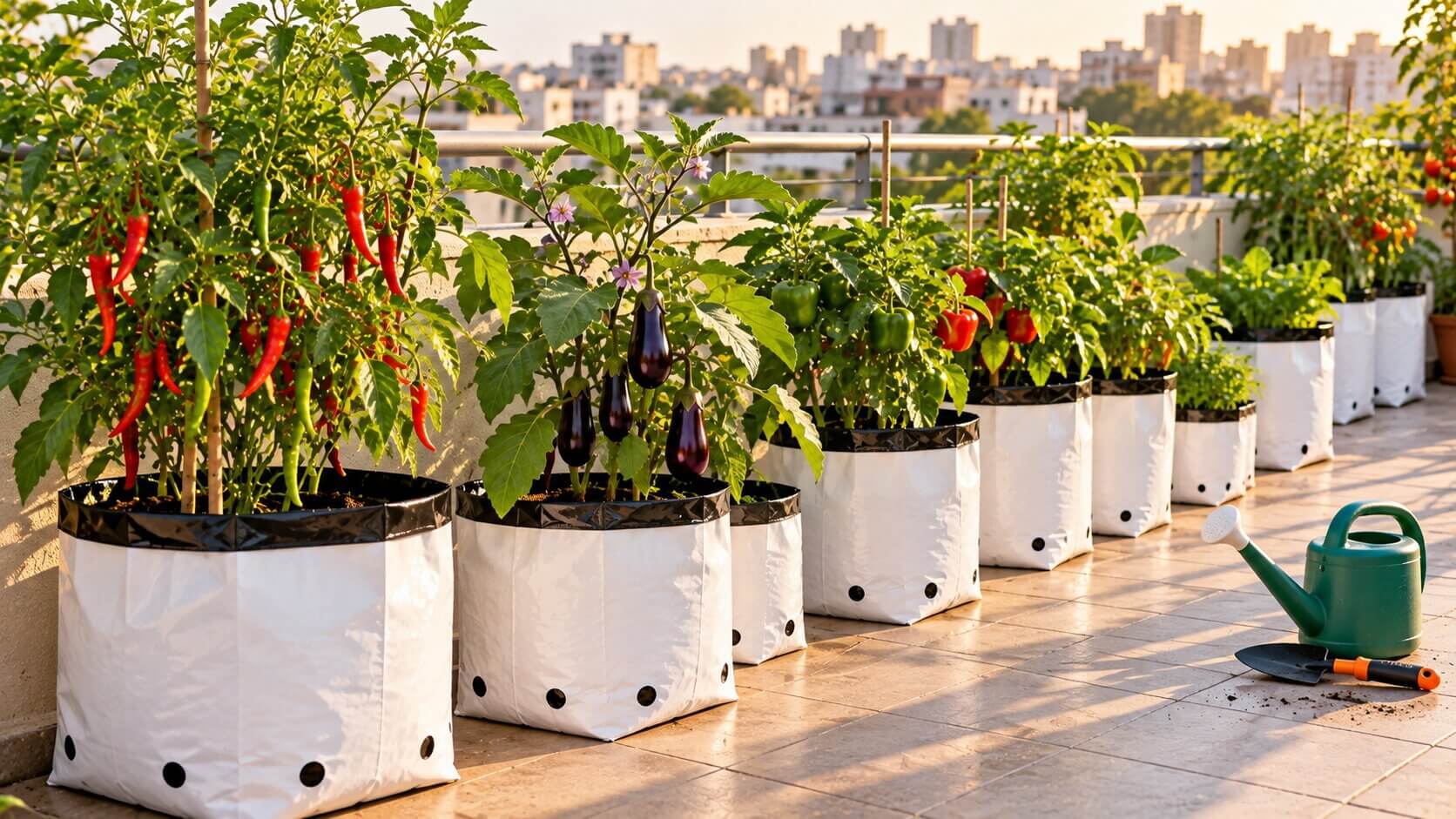
- Fruiting vegetables such as tomato, chilli, capsicum and brinjal need a sunny spot for at least 6 hours a day.
- Leafy greens and herbs manage with less sun and are good for partly shaded corners.
- Protect the slab: place bags on a tray, bricks or a mat so water does not stain or sit on the terrace floor.
- Plan access: leave walkways so you can water and harvest every bag easily.
- Check the load: for a large garden, check your roof’s limits and keep the mix light.
Make a good potting mix
A simple, light mix works well: roughly equal parts garden soil, compost and cocopeat. Cocopeat keeps the mix light and holds moisture, and compost feeds the plants. Avoid heavy clay soil on its own, as it packs down and drains poorly. Mix everything well and moisten it before filling.
Fill and plant, step by step
- Open the bag fully and stand it on a flat surface. The square base keeps it stable.
- Fill with the potting mix, leaving 3 to 5 cm at the top for watering.
- Water slowly until water comes out of the drainage holes, then let it settle and top up if needed.
- Plant seedlings, or sow seeds at the depth given on the packet. One plant per bag for tomato, chilli and brinjal.
- Push in a stake at planting for tomato, brinjal and climbers, so you do not disturb roots later.
What to grow
| Season (most of India) | Good choices |
|---|---|
| October to February | Tomato, chilli, capsicum, palak, methi, coriander, lettuce |
| March to June | Okra, brinjal, chilli, cucumber and gourds, with summer shade |
| Monsoon | Leafy greens, beans and gourds, with good drainage |
Herbs like mint and basil, flowers and young saplings also do well. For which crops suit this bag size, see our grow bag size guide for tomato, chilli and brinjal.
Support for tall plants
Tomatoes, brinjal, cucumber and beans need support once they start to flower. Clip stems to a stake every 20 to 30 cm with plant support clips. No knots, and the clip leaves room for the stem to thicken. See how to support tomato and climbing plants with clips and, for climbers, supporting cucumber and gourds.
Watering and care
- Check moisture by pushing a finger into the mix. Water when the top few centimetres feel dry.
- In hot weather, bags dry faster than garden beds, so check them every morning.
- Water at the base of the plant, not the leaves, ideally early in the morning.
- With many bags, a drip line held by 16 mm drip pipe stakes saves a lot of time.
- Top up with compost every few weeks during the growing season.
Summer shade
From April to June, rooftop heat can scorch leaves and make flowers drop. A 35 to 50% shade net fixed to a frame with shade net clips helps plants through the hottest weeks. Read our shade net for terrace garden guide.
End of season
Empty the mix (it can be refreshed with compost and reused), rinse the bags, let them dry and fold them flat for storage.
Want a full shopping list? See our terrace kitchen garden starter kit. Setting up a large or community garden? Ask for a bulk quote.
Frequently asked questions
Are grow bags good for terrace gardening?
Yes. HDPE grow bags are light, drain well, reflect heat with a white surface and are easy to move, which suits Indian rooftops.
What potting mix should I use in grow bags?
A light mix of roughly equal parts garden soil, compost and cocopeat. Avoid heavy clay soil on its own.
What size are your grow bags?
20 × 20 × 35 cm, about 8 × 8 × 14 inch, holding roughly 14 litres of mix.
How often should I water grow bags?
Check daily in summer and water when the top few centimetres of mix are dry. Bags dry faster than ground beds.
Which vegetables grow best in grow bags?
Chilli, capsicum, brinjal, okra, cherry and bush tomato, leafy greens and herbs all grow well in grow bags.
Can I reuse grow bags?
Yes. Empty, rinse and dry them, then fold them flat to store for the next season.