
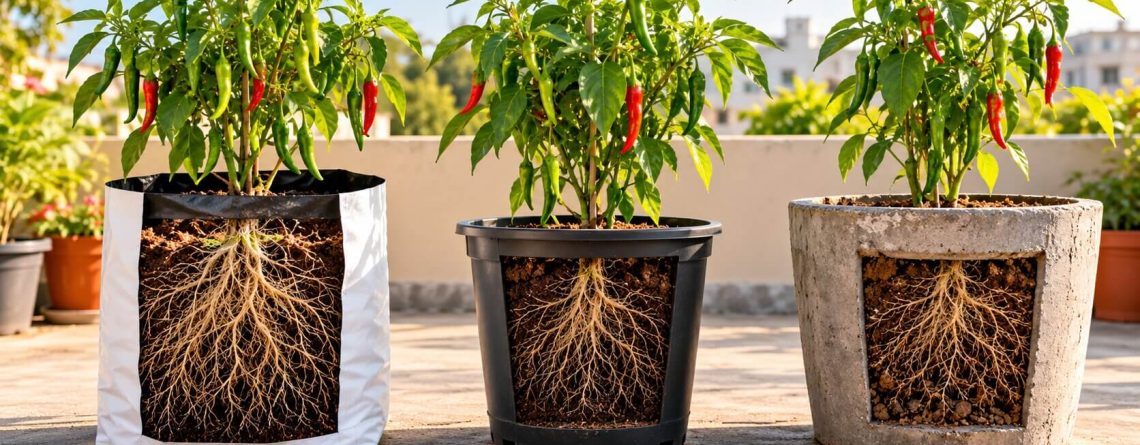
HDPE Grow Bags vs Plastic Pots vs Cement Pots
Every terrace gardener faces the same question at the start: what should my plants grow in? Cement pots look solid, plastic pots are everywhere, and grow bags are what most serious rooftop growers end up using. This guide compares grow bag vs pot options, HDPE grow bags, plastic pots, clay pots and cement pots, on the things that matter on an Indian terrace: weight, heat, drainage, cost and convenience.
Quick comparison
| Factor | HDPE grow bags | Plastic pots | Clay (terracotta) pots | Cement pots |
|---|---|---|---|---|
| Weight (empty) | Very light | Light | Heavy | Very heavy |
| Load on roof | Lowest | Low | High | Highest |
| Heat in summer | White surface reflects sun | Dark pots can get very hot | Stays cooler, dries fast | Holds and releases heat |
| Drainage | Punched holes | Depends on holes | Good, porous walls | Depends on holes |
| Moving | Easy | Easy | Hard when full | Very hard |
| Storage off-season | Folds flat | Stacks | Bulky, breakable | Bulky |
| Breakage | Does not break | Can crack in sun over time | Breaks if dropped | Can crack |
| Looks | Practical | Varied | Classic | Solid, permanent |
| Cost per plant | Low | Low to medium | Medium | Medium to high |
HDPE grow bags
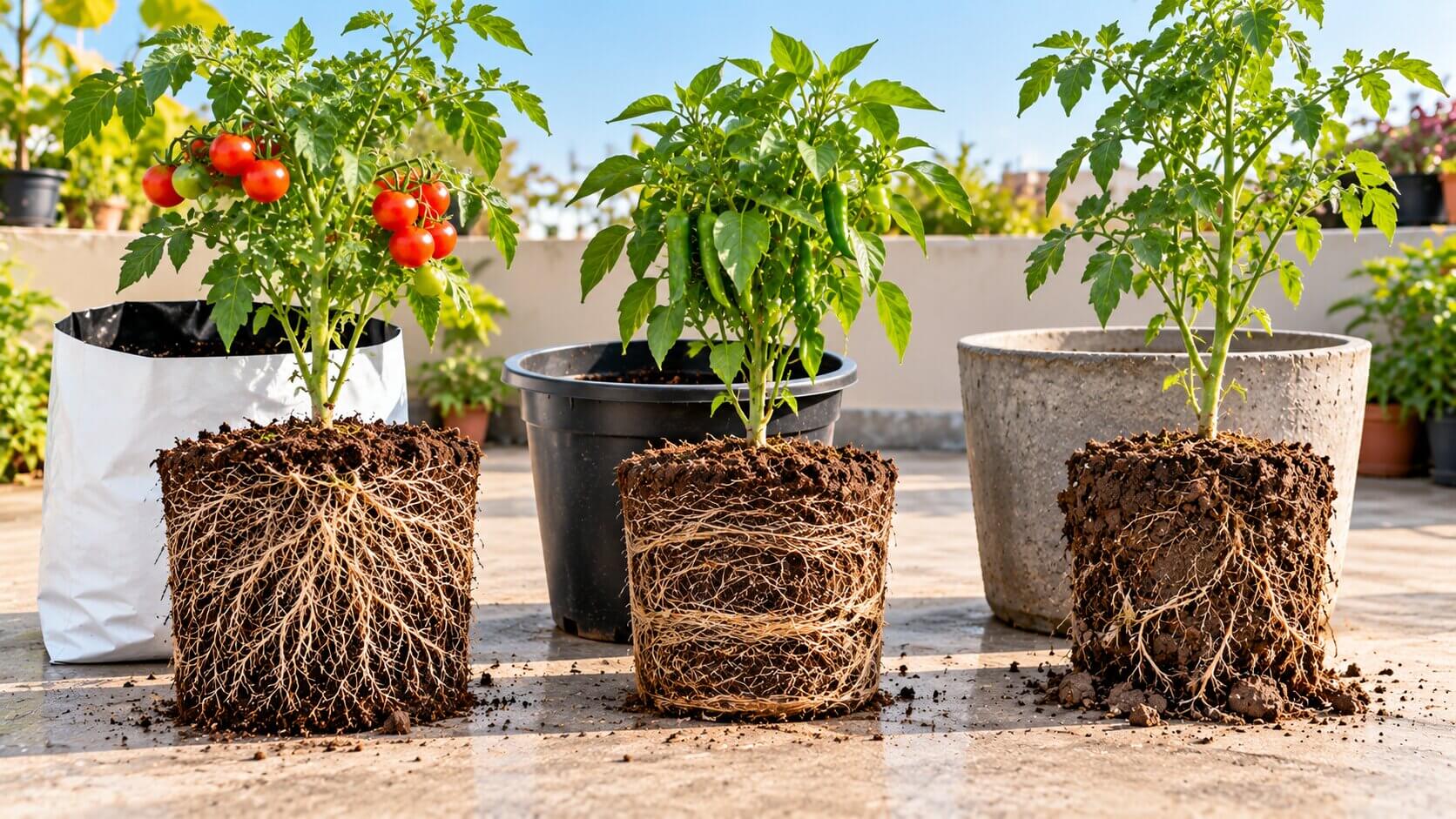
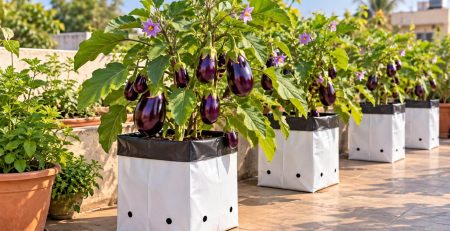
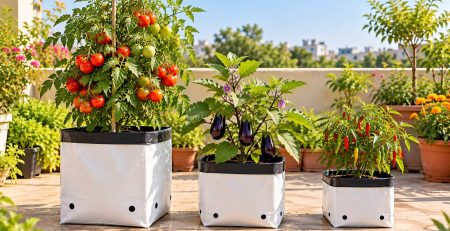
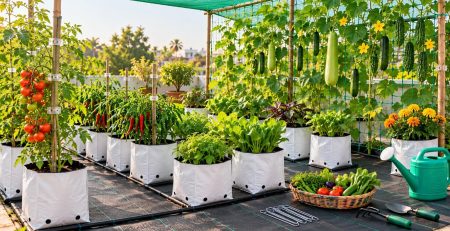
Best for: vegetable gardens, large terraces, nurseries and anyone who wants many plants without overloading the roof.
- Light: easy to carry up stairs and gentle on roof load.
- White outer surface: reflects sunlight on hot days instead of absorbing it.
- Drainage holes: excess water escapes so roots do not sit wet.
- Movable: shift bags to follow the sun or make space.
- Folds flat: empty, clean and store at the end of the season.
Watch out for: tall plants in a light bag can tip over when loaded with fruit. Add a stake at planting and fix stems with plant support clips.
Plastic pots
Best for: ornamental plants, balconies, indoor plants and small gardens.
- Light, cheap and available in many sizes and colours.
- Dark pots in full sun can heat the root zone a lot.
- Thin pots can go brittle and crack after a few summers in strong sun.
- Check for enough drainage holes; many decorative pots have too few.
Clay (terracotta) pots
Best for: herbs, flowering plants and anyone who likes a traditional look.
- Porous walls breathe and keep roots cooler.
- The same porosity means the mix dries faster, so you water more often in summer.
- Heavy when full and break if knocked over.
Cement pots
Best for: permanent plantings like trees, large shrubs and fixed landscaping.
- Very stable; they will not blow over.
- Very heavy, which matters a lot on a roof slab.
- Almost impossible to move once filled.
- Concrete holds heat and can stay warm into the evening.
Weight matters on a terrace
A roof slab is designed for a certain load. Every container adds its own weight plus wet mix. With many containers, heavy cement and clay pots add up quickly. Light grow bags with a light mix of soil, compost and cocopeat keep the total load down. If you plan a large garden, check with a structural engineer or your building’s guidelines.
Which should you choose?
| Your goal | Best choice |
|---|---|
| A productive vegetable garden on a roof | HDPE grow bags |
| A few herbs on a balcony | Clay or plastic pots |
| Decorative plants indoors | Plastic or ceramic pots |
| A permanent tree on the ground floor | Cement pot or ground planting |
| A nursery or community garden | HDPE grow bags in bulk |
Many gardeners mix both: decorative pots near the door and grow bags for the vegetable area.
Getting the most from grow bags
- Match the bag to the crop. See our grow bag size guide for tomato, chilli and brinjal.
- Fill with a light, well-drained mix and leave 3 to 5 cm at the top for watering.
- Set up summer shade with shade net clips.
- Water evenly with a drip line held by 16 mm drip pipe stakes.
- Keep the floor around bags clean with 0.6 m weed mat where there is soil or gravel.
Starting from scratch? Our terrace kitchen garden starter kit lists everything you need. Setting up a garden for a school, office or society? Ask for a bulk quote.
Frequently asked questions
Are grow bags better than pots?
For vegetables on a terrace, usually yes. HDPE grow bags are lighter, drain well, are easy to move and fold flat for storage. Pots suit decorative and permanent plantings.
Are cement pots safe on a terrace?
Cement pots are very heavy, especially when full of wet soil. Many of them add significant load to a roof slab, so check your building’s limits for large gardens.
Do grow bags get hot in the sun?
White HDPE grow bags reflect sunlight, so they stay cooler than dark plastic pots. Shade net in peak summer helps further.
How long do HDPE grow bags last?
They can be emptied, cleaned, folded and reused for more than one season with care.
Are clay pots good for vegetables?
Clay pots keep roots cool but dry out quickly in summer and are heavy. They suit herbs and small plants better than large vegetables.
What size grow bag should I use?
Our 20 × 20 × 35 cm bag holds about 14 litres, which suits chilli, brinjal, okra, cherry tomato, greens and herbs.

LEAVE A COMMENT