
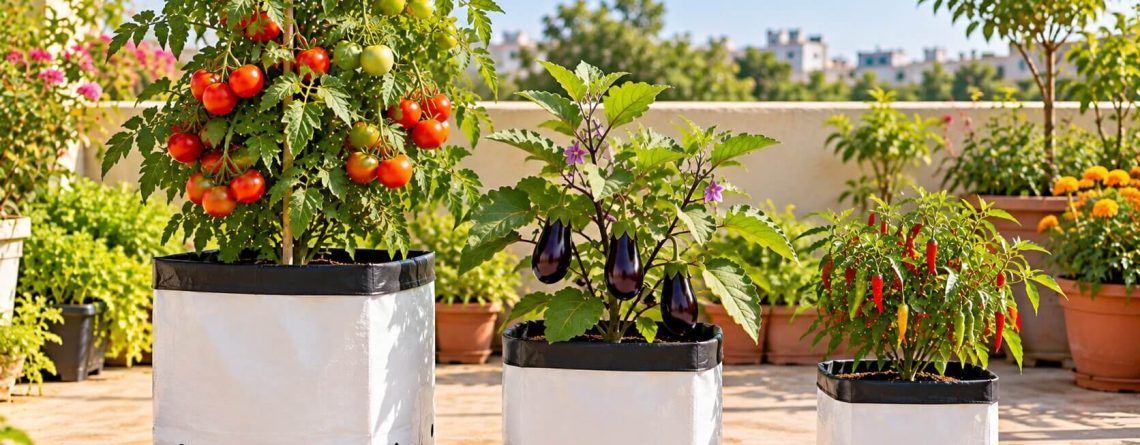
Best Grow Bag Size for Tomato, Chilli and Brinjal on a Terrace
Picking the right grow bag size for tomato, chilli and brinjal is the difference between a terrace full of fruit and a row of thirsty, stunted plants. Too small, and roots run out of room and the mix dries out by afternoon. Too big, and you waste mix, weight and space on your roof. This guide gives simple size guidance for the vegetables most Indian terrace gardeners grow, and shows where our 20 × 20 × 35 cm HDPE grow bags fit best.
Why grow bag size matters
- Root room: fruiting vegetables need enough depth for roots to anchor a heavy plant.
- Water buffer: more mix holds more water, which matters on a hot terrace in April to June.
- Nutrients: a larger volume of mix feeds the plant longer between top-ups.
- Weight: every litre of wet mix adds load on your roof, so bigger is not always better.
Grow bag size guide by vegetable
As a general guide, fruiting vegetables want more mix than leafy greens and herbs. Use this as a starting point and adjust for your variety and climate.
| Vegetable | Suggested volume per plant | Plants per bag | Our 20 × 20 × 35 cm bag (about 14 L) |
|---|---|---|---|
| Chilli and capsicum | 10 to 15 litres | 1 | Good fit |
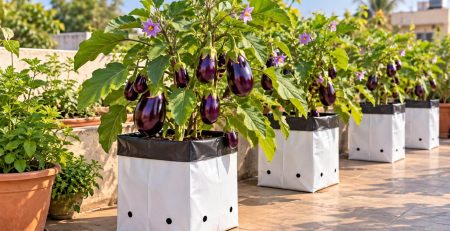
| Brinjal (eggplant) | 12 to 20 litres | 1 | Good fit for most home varieties |
| Cherry and compact (bush) tomato | 12 to 20 litres | 1 | Good fit, with a stake |
| Large climbing (indeterminate) tomato | 20 litres or more | 1 | Use a larger container for best yield |
| Okra | 10 to 15 litres | 1 | Good fit |
| Leafy greens (palak, methi, lettuce) | 5 to 10 litres | Several | Good fit |
| Herbs (mint, coriander, basil) | 5 to 10 litres | 1 to several | Good fit |
These volumes are general gardening guidance, not fixed rules. Hot, windy terraces benefit from the upper end of each range.
About our grow bags
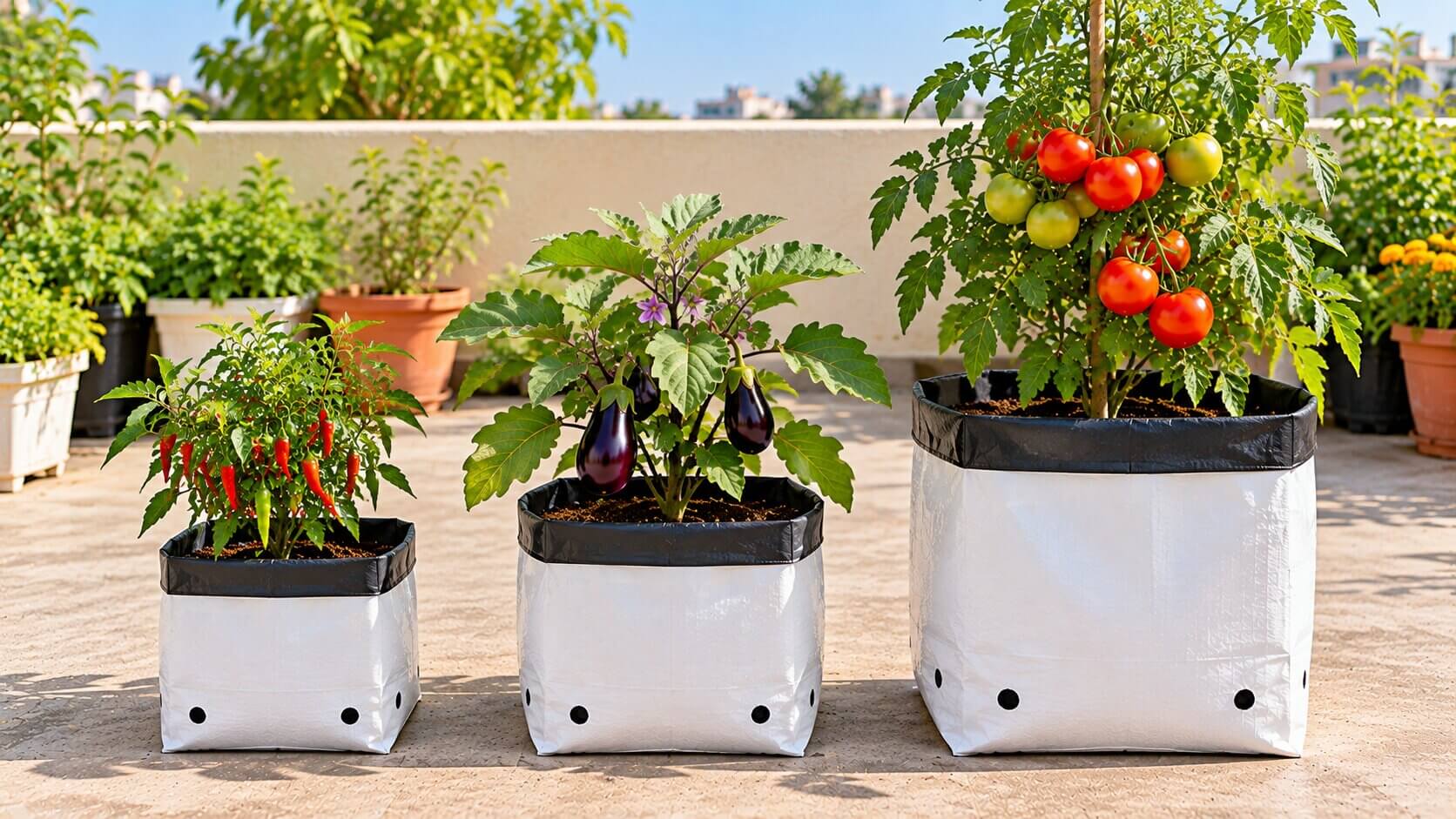
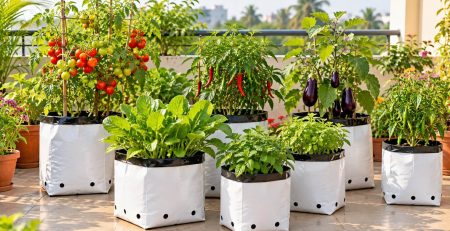
Our HDPE grow bags measure 20 × 20 × 35 cm (about 8 × 8 × 14 inch), which works out to roughly 14 litres of mix. The tall shape gives roots good depth on a small footprint, so you can fit more plants on a terrace or balcony.
- White outer surface reflects sunlight on hot days.
- Drainage holes let excess water escape so roots do not sit wet.
- Light HDPE is easier to carry up to a terrace than clay or cement pots.
- Movable, so you can shift bags to follow the sun.
- Folds flat to store at the end of the season.
They are sold in packs of 100, 200, 500 and 1000, which suits large terrace gardens, community gardens and nurseries.
How to fill and plant
- Mix a light potting mix: garden soil, compost and cocopeat. A light mix drains well and keeps the bag manageable.
- Fill to 3 to 5 cm below the top to leave room for watering.
- Water slowly until it drains, then let the mix settle.
- Plant one seedling per bag for tomato, chilli and brinjal.
- Place in full sun, at least 6 hours a day for fruiting crops.
- Add a stake at planting time for tomato and brinjal so you do not damage roots later.
Supporting tomato and brinjal in bags
A loaded tomato or brinjal plant can tip a bag over. Push a bamboo stake into the bag at planting and fix the stem with plant support clips every 20 to 30 cm as it grows. No knots, and the clip leaves room for the stem to thicken. Our guide on supporting tomato and climbing plants with clips has more detail.
Watering grow bags in summer
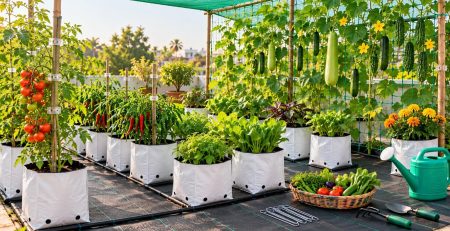
Bags on a hot terrace dry faster than ground beds. Check the mix every morning by pressing a finger in; water when the top few centimetres are dry. For many bags, a simple drip line held in place with 16 mm drip pipe stakes saves a lot of time. A shade net canopy fixed with shade net clips also cuts afternoon heat; see how to fix shade net without drilling.
How many bags fit on your terrace?
With a 20 × 20 cm footprint and a little spacing for air and access, you can plan roughly 4 to 6 fruiting plants per square metre of growing area. Leave walkways between rows so you can water and harvest easily. Check your roof’s load limits before filling a large area.
Related guides
New to terrace gardening? Start with our beginner’s guide to grow bags for terrace and balcony gardening.
Frequently asked questions
What size grow bag is best for tomato?
Cherry and compact bush tomatoes do well in about 12 to 20 litres of mix, such as our 20 × 20 × 35 cm bag with a stake. Large climbing tomatoes give better yields in 20 litres or more.
What size grow bag for chilli?
Chilli and capsicum do well in 10 to 15 litres of mix, one plant per bag. Our 20 × 20 × 35 cm grow bag (about 14 litres) is a good fit.
What size grow bag for brinjal?
Most home brinjal varieties grow well in 12 to 20 litres, one plant per bag, with a stake for support.
How many litres is a 20 × 20 × 35 cm grow bag?
About 14 litres (20 × 20 × 35 cm = 14,000 cubic cm).
Do your grow bags have drainage holes?
Yes. They have punched drainage holes so excess water escapes and roots do not sit wet.
Can I buy a few grow bags?
Our grow bags are sold in packs of 100, 200, 500 and 1000, which suits large terrace gardens, community gardens and nurseries.

LEAVE A COMMENT