
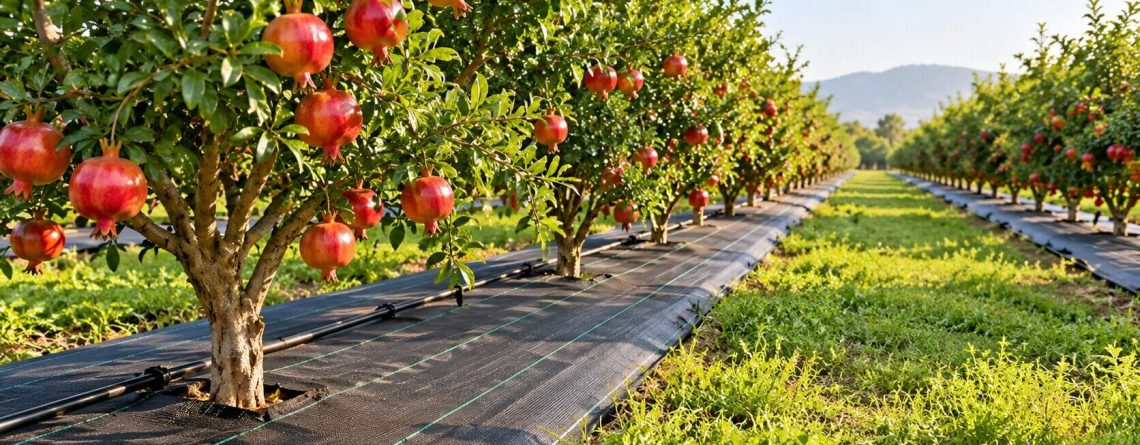
Weed Mat for Banana, Pomegranate and Orchard Rows
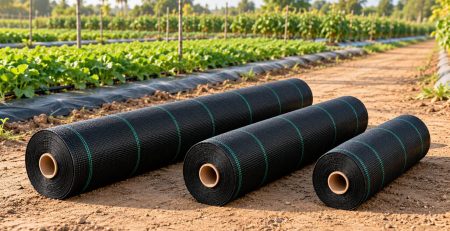
In a young orchard, weeds race your trees for water, fertiliser and sunlight, and they grow fastest exactly where you water: right along the drip line. A strip of weed mat for orchard rows stops that competition at the source, cuts weeding labour, and keeps the base of every tree clean. This guide covers how to use weed mat in banana, pomegranate, mango, guava and citrus rows, which roll width to choose, and how to lay it so it lasts.
Why weed control matters most in orchard rows
- Water and fertiliser go to weeds first. Weeds near the trunk sit right in the wetted zone of the dripper and take a share of every feed.
- Young trees suffer most. In the first two to three years, roots are shallow and weeds can slow growth noticeably.
- Weeding near trunks is slow and risky. Hoes and brush cutters damage bark and drip pipes.
- Weeds hide pests. A clean strip makes it easier to spot problems at the base of the tree.
Weed mat blocks sunlight so weeds cannot sprout, while rain, drip water and air still pass through to the roots.
Which roll width for which orchard?
| Orchard type | Recommended mat | Layout |
|---|---|---|
| Banana (single or paired rows) | 1.5 m × 100 m | One strip centred on each row, covering both sides of the drip line |
| Pomegranate, guava, citrus | 1.5 m × 100 m | Strip along the tree row, or squares around each basin |
| High-density mango and young fruit plants | 1 m × 100 m or 1.5 m | Strip along the row; widen as the canopy grows |
| Nursery rows and young saplings | 0.6 m × 100 m | Narrow strip along each sapling line |
The 1.5 m roll covers 150 sq m and means fewer joins along long rows, so it is the usual choice for fruit orchards. One roll covers a 100 m tree row.
How to lay weed mat in an orchard row
- Clear the strip. Remove existing weeds, roots and sharp stones, and level the soil along the row.
- Lay or check the drip line first. Fix laterals in place with 16 mm drip pipe holder stakes so emitters stay next to the trees.
- Roll the mat along the row. Use the green guide lines to keep it straight and centred on the trees.
- Cut at each tree. Cut a slit from the edge to the trunk, then an X or a small square around the trunk. Leave a small gap around the trunk so the bark stays dry and the mat does not rub.
- Overlap joins by 10 to 15 cm and pin along the overlap.
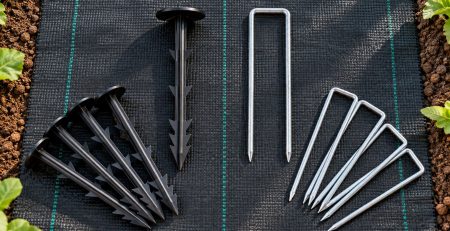
- Pin the edges every 1 to 1.5 m. In loose, sandy or windy orchards use 7 inch weed mat nails or galvanized U-pins.
- Check after the first heavy rain and add pins where the edge lifts.
Crop notes
Banana
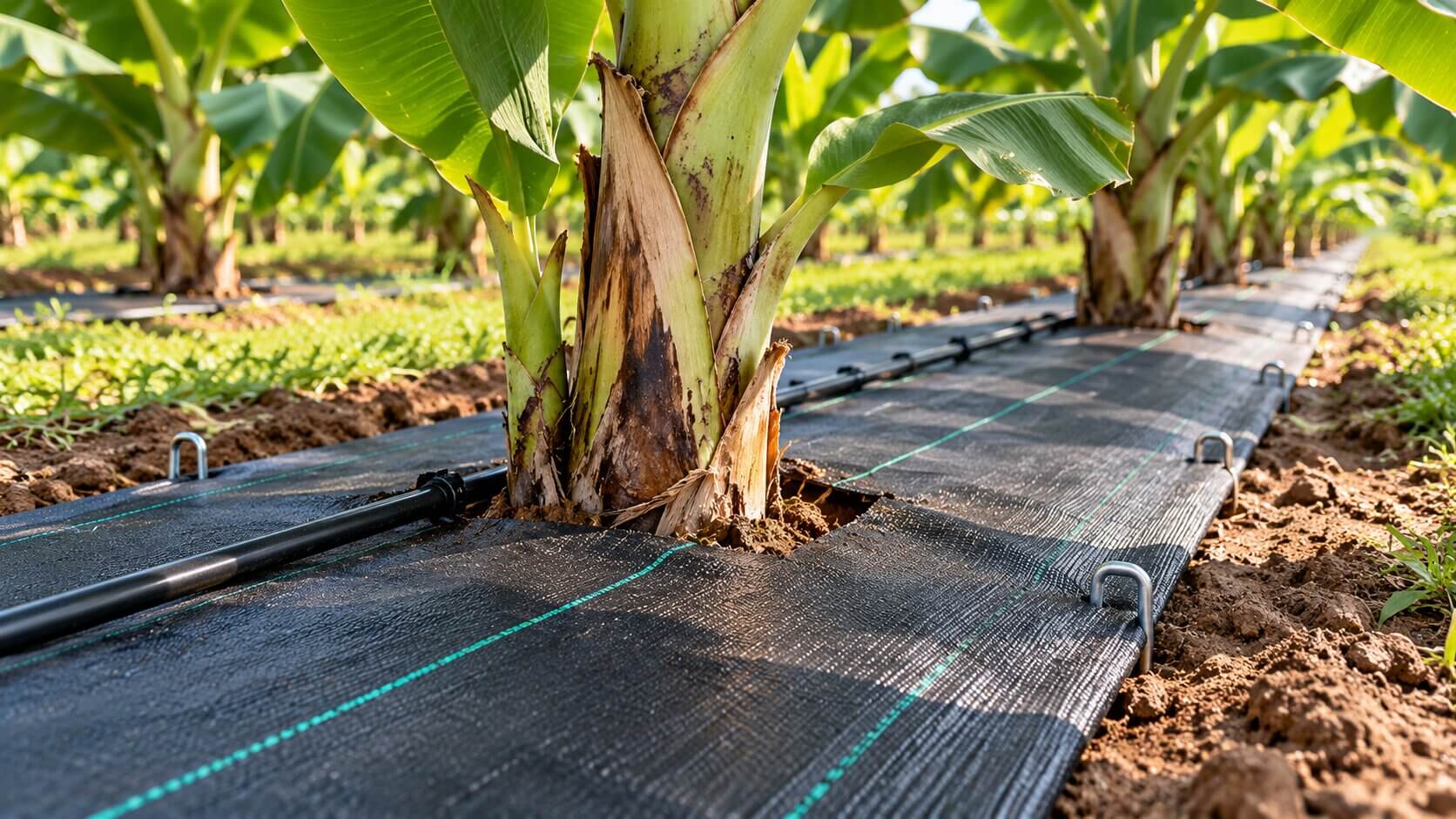
Banana is a heavy feeder and is grown widely on drip in Kerala, Tamil Nadu, Maharashtra and Karnataka. Weed mat keeps the base clean between suckers and stops weeds taking water. Make the planting cut a little larger so you can manage suckers. Because the mat is woven and water permeable, monsoon rain drains through instead of pooling on top.
Pomegranate
Pomegranate orchards in Maharashtra and Karnataka are mostly drip-fed, so weeds cluster tightly around each dripper. A 1.5 m strip along the row keeps the basin clean and makes fallen fruit easier to collect.
Mango, guava and citrus
For young mango, guava, lemon and other citrus, a mat strip protects the tree in its establishment years, when weed competition hurts most. As the canopy widens, you can add a second strip beside the first.
How much will you need?
One 1.5 m × 100 m roll covers 100 m of tree row. Multiply your number of rows by row length and divide by 100. For pins, allow about 200 per roll at 1 m spacing on both edges.
| Orchard | Total row length | Rolls (1.5 m) | Pins at 1 m |
|---|---|---|---|
| Small orchard, 5 rows × 40 m | 200 m | 2 | about 400 |
| Medium, 10 rows × 60 m | 600 m | 6 | about 1,200 |
| Large, 25 rows × 100 m | 2,500 m | 25 | about 5,000 |
For orders of many rolls, ask us for a bulk quote.
Common mistakes in orchards
- Mat tight against the trunk: leave a small gap so bark stays dry.
- Laying mat before fixing drip: always fix and test drip lines first.
- Too few pins on windy sites: a lifted edge lets light in and weeds return.
- Leaving soil or mulch on top: weeds can root in debris on top of the mat, so sweep it clean.
Related guides
See our step-by-step weed mat laying guide, learn how to keep drip lines in place, and read how to choose the right weed mat for your farm.
Frequently asked questions
Which weed mat is best for an orchard?
A 110 GSM UV-stabilised woven weed mat in 1.5 m width suits most orchard rows. It covers both sides of the drip line with fewer joins.
Can I use weed mat for banana plants?
Yes. Lay a 1.5 m strip along each banana row over the drip line and cut planting holes slightly larger to manage suckers. Rain and drip water pass through the woven mat.
Does weed mat block water to fruit tree roots?
No. Woven polypropylene weed mat is water and air permeable, so rain and drip water reach the roots while sunlight is blocked.
How many weed mat rolls do I need per acre of orchard?
It depends on row length. One 1.5 m × 100 m roll covers 100 m of tree row, so add up your total row length and divide by 100.
Which nails should I use for weed mat in an orchard?
Use 7 inch weed mat nails or galvanized U-pins in loose, sandy or windy orchards, and 6 inch nails in firm soil. Pin edges every 1 to 1.5 m.
How long does weed mat last in an orchard?
Our UV-stabilised 110 GSM mat is rated for 3 to 5 years outdoors, which covers the establishment years of most fruit trees.






LEAVE A COMMENT